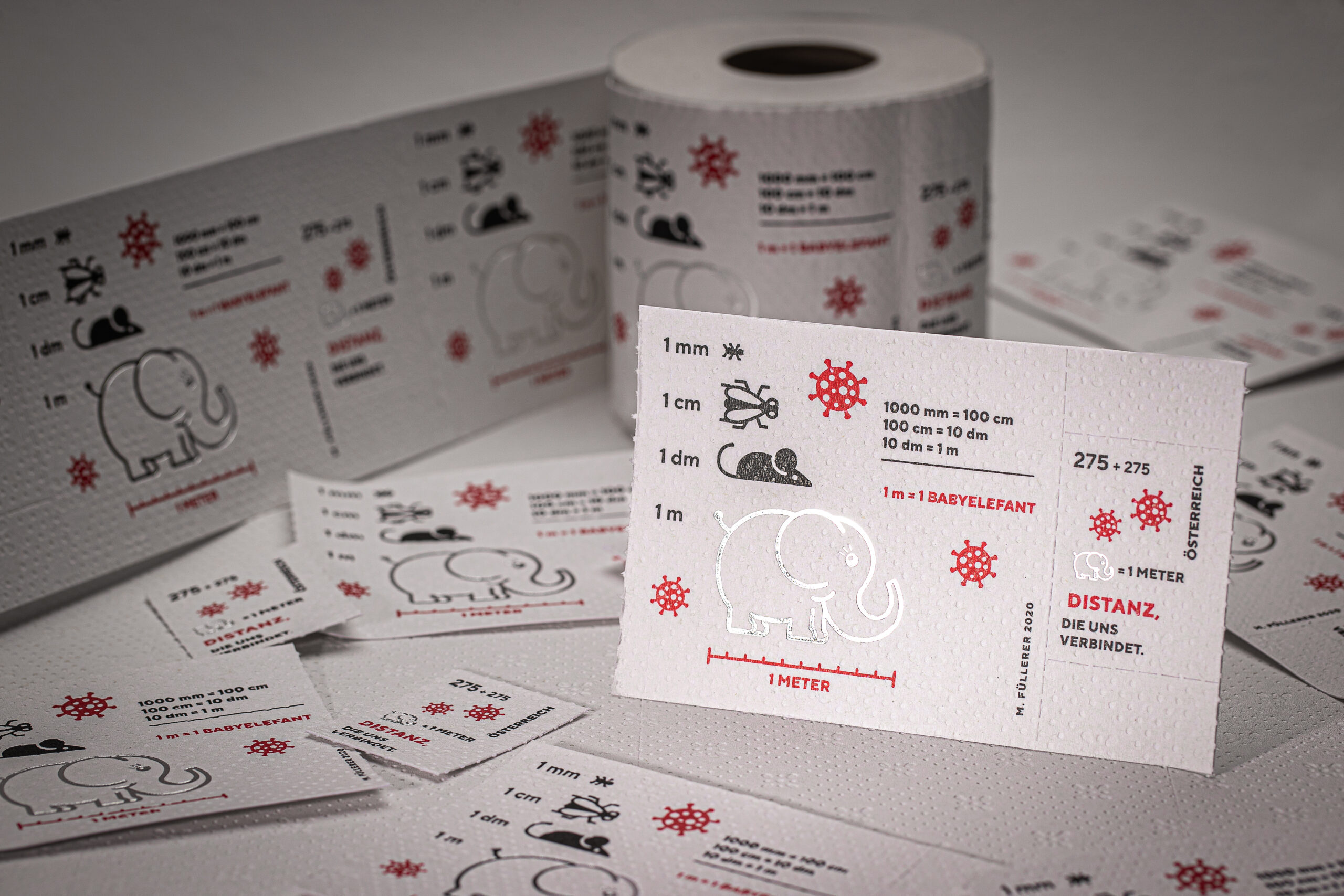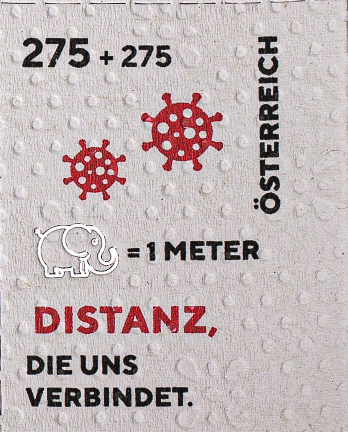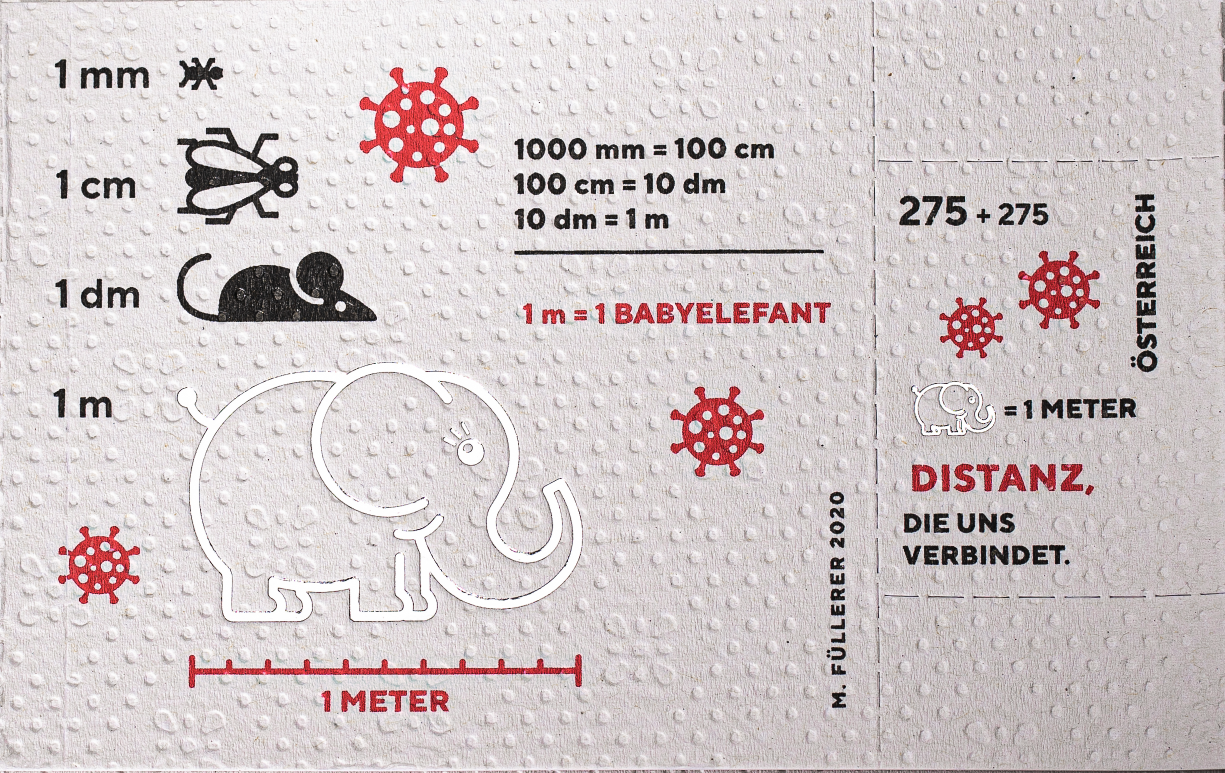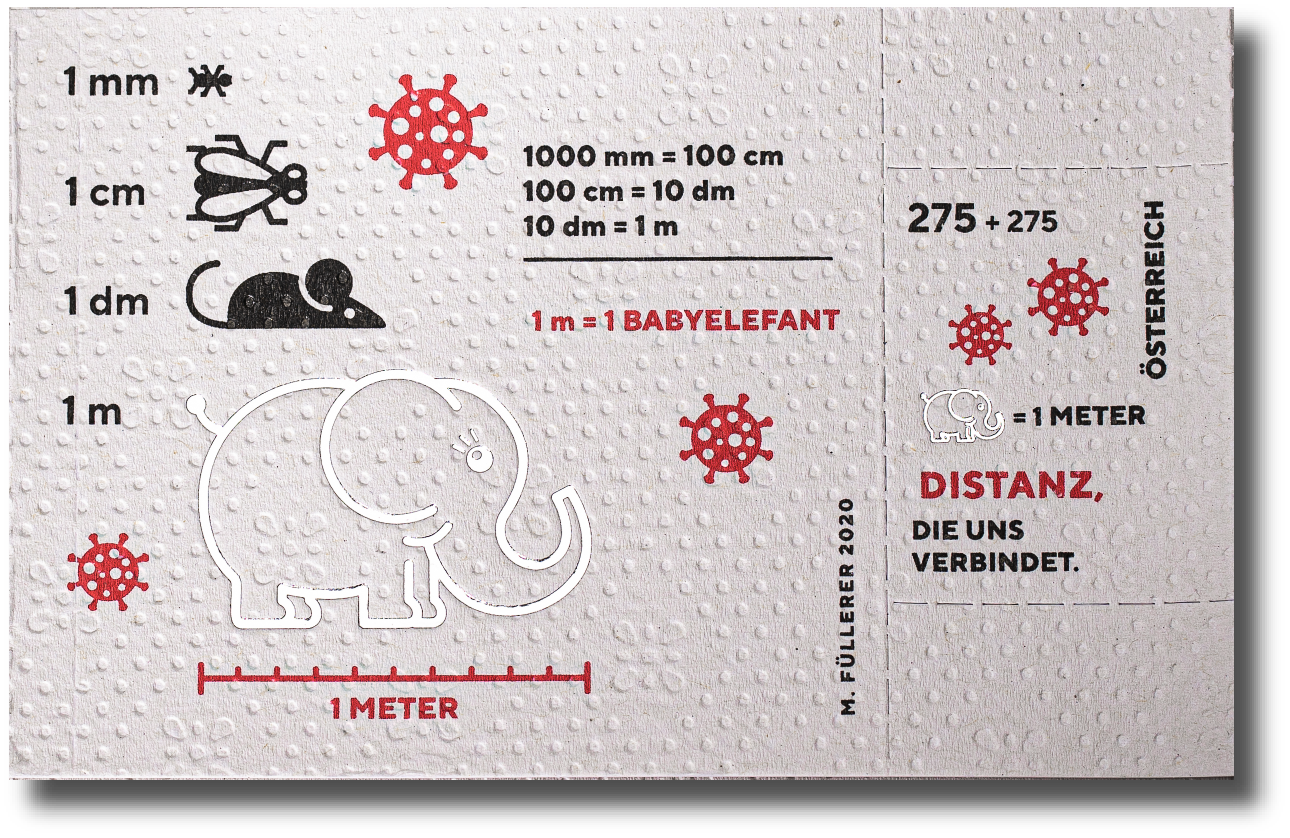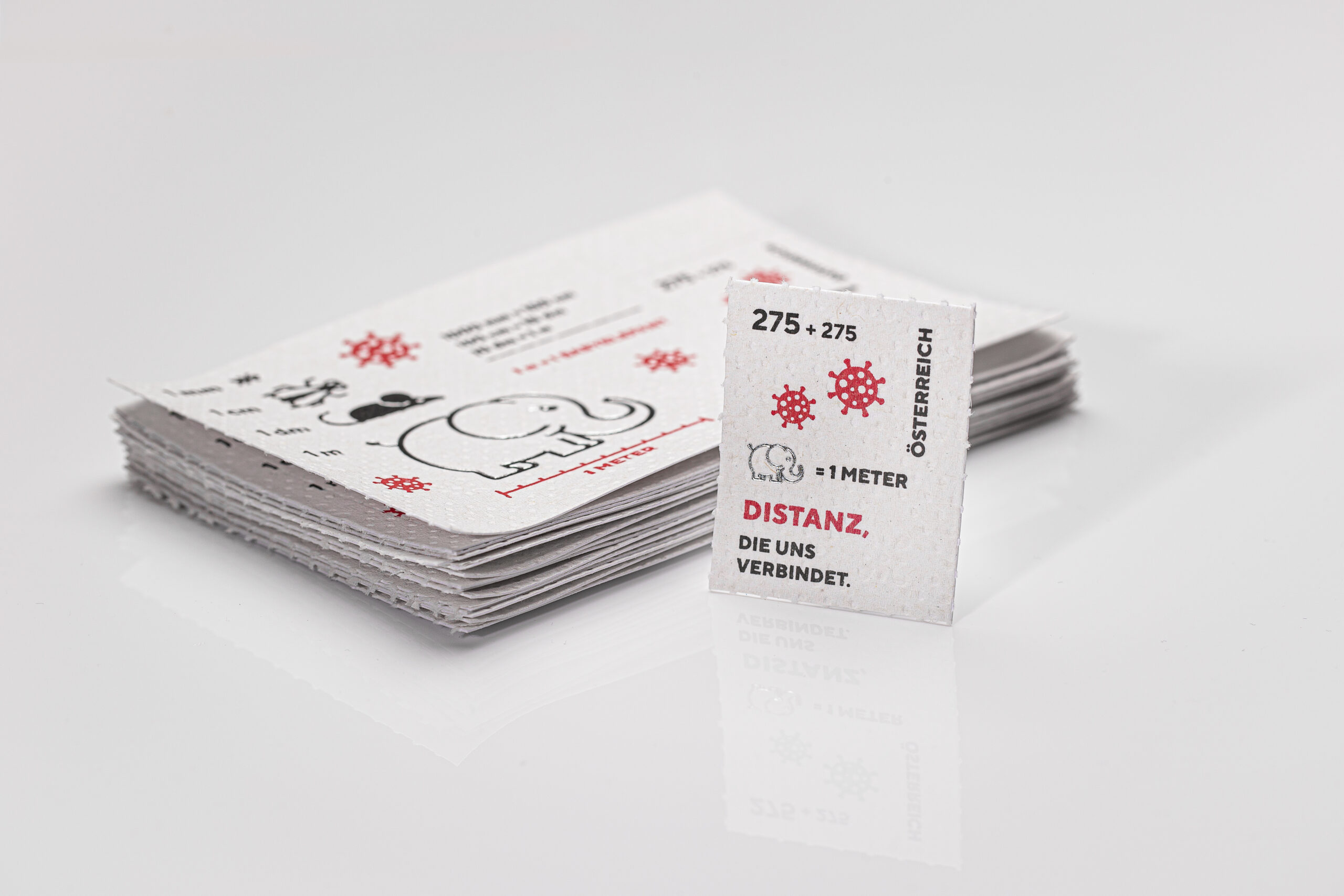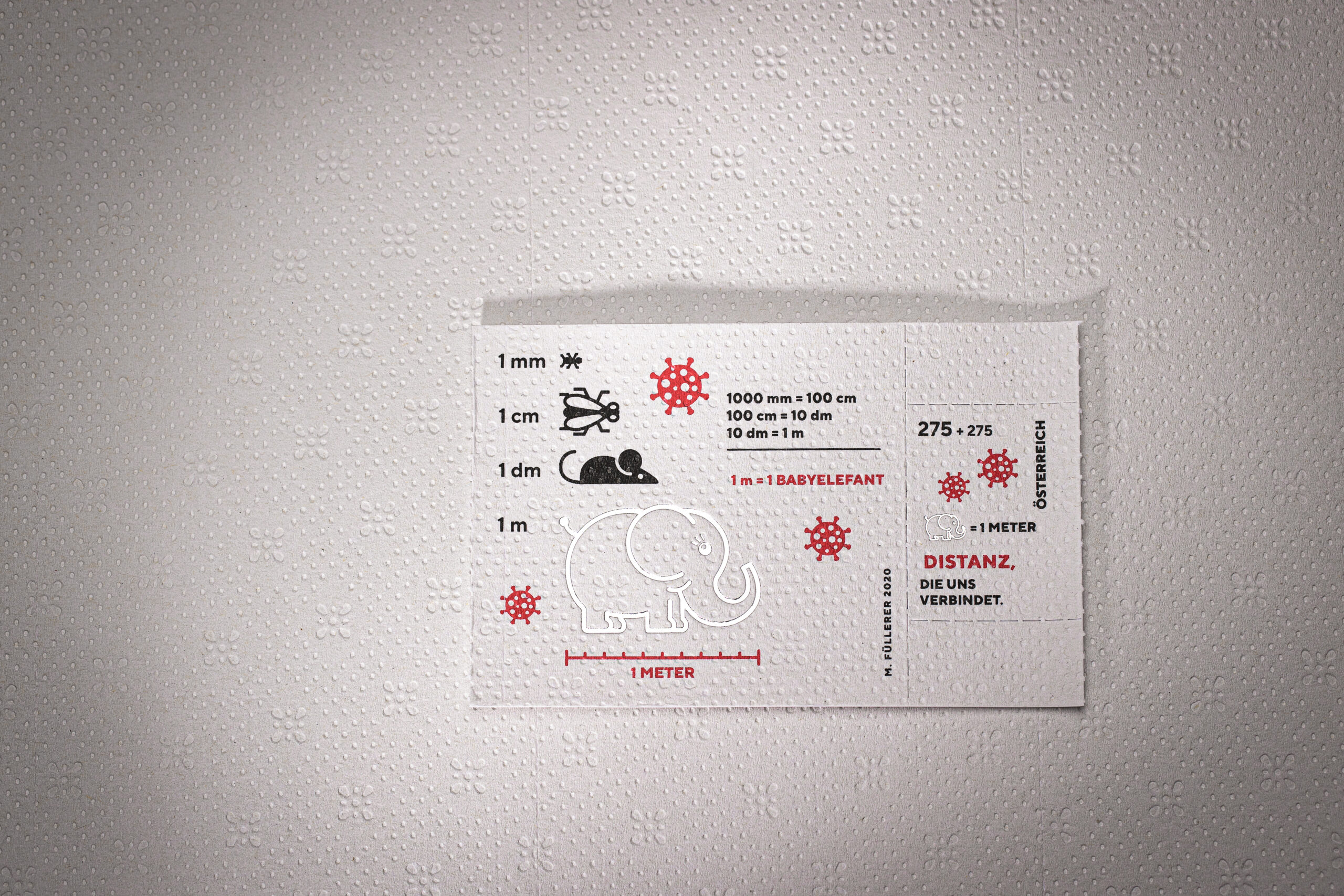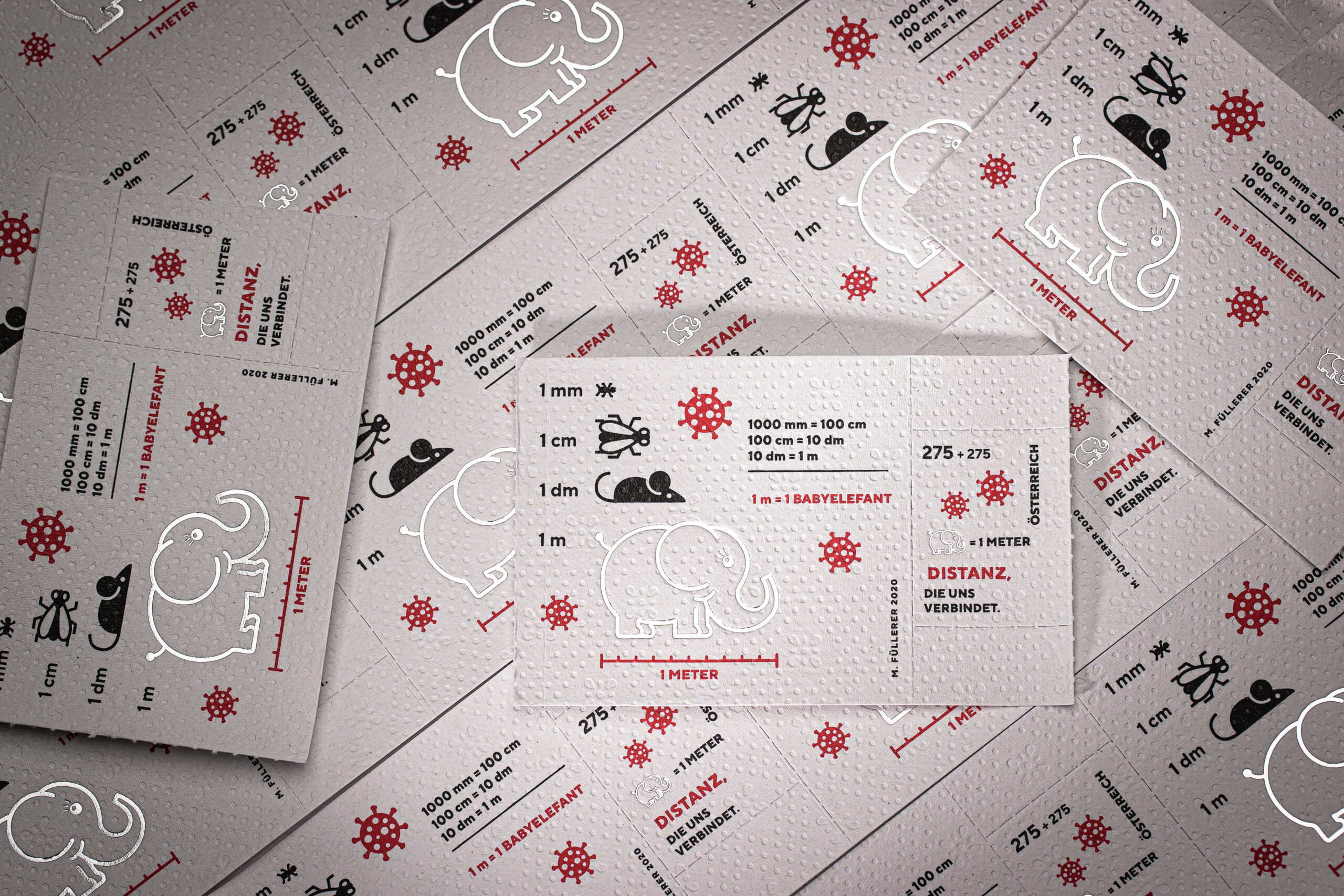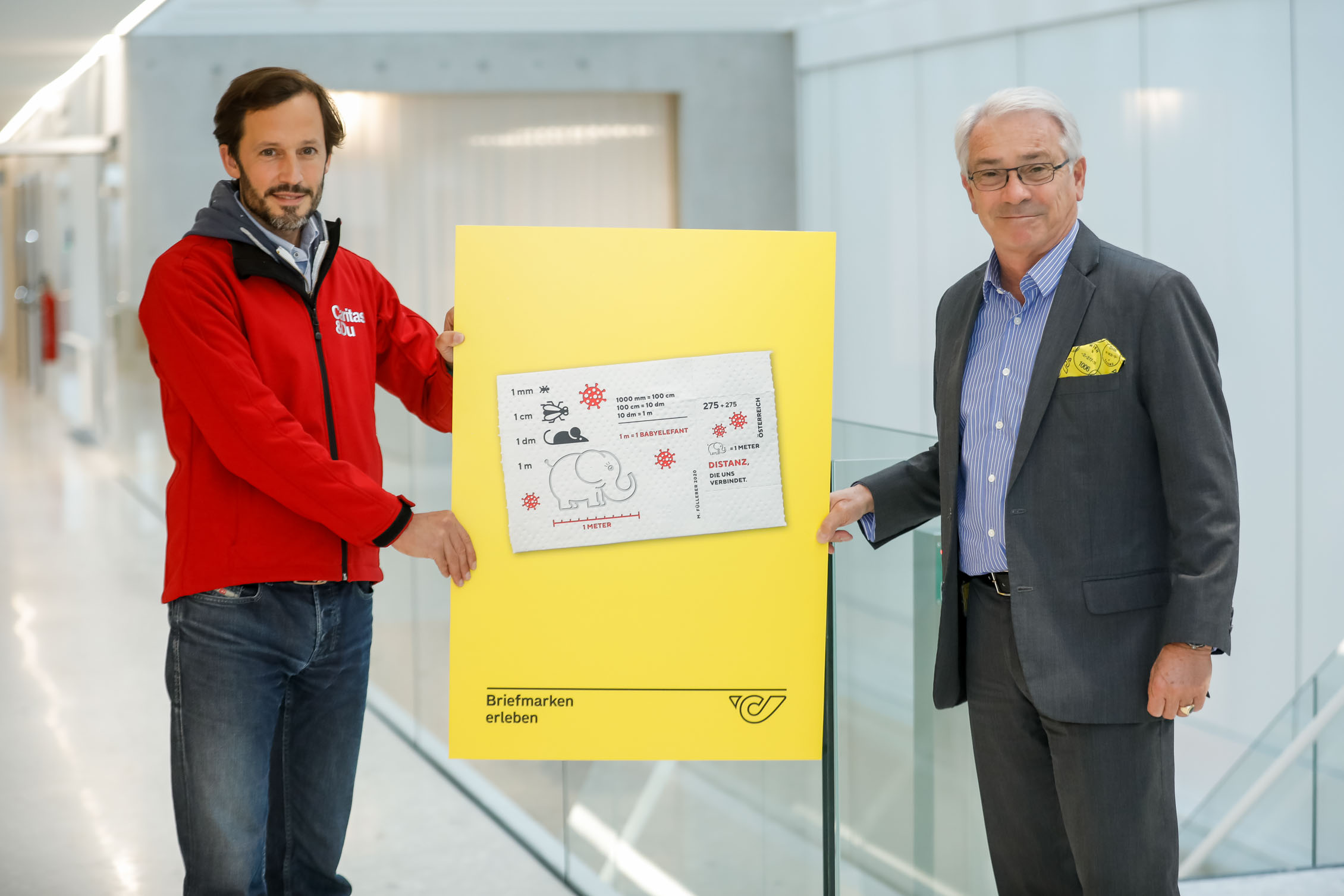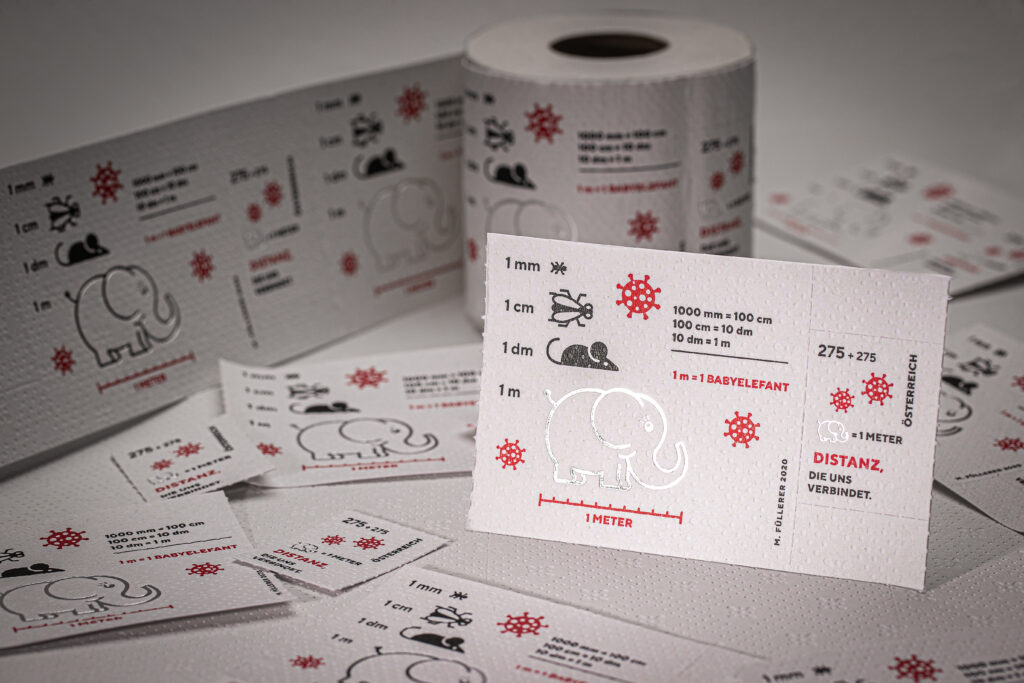
THIS WAS ONE OF THE SLOGANS OF THE CORONA ERA: keeping your distance from other people was meant to prevent the spread of the disease as far as possible. The symbol that was used to help us judge the ideal distance of at least one metre was the frequently mentioned “baby elephant”, and that is why a baby elephant is featured as an illustration embellished with shiny hot foil on this block of stamps. Other, smaller animals are depicted for the purposes of comparison. Not the distance, however, but rather that which binds us together is emphasised by the
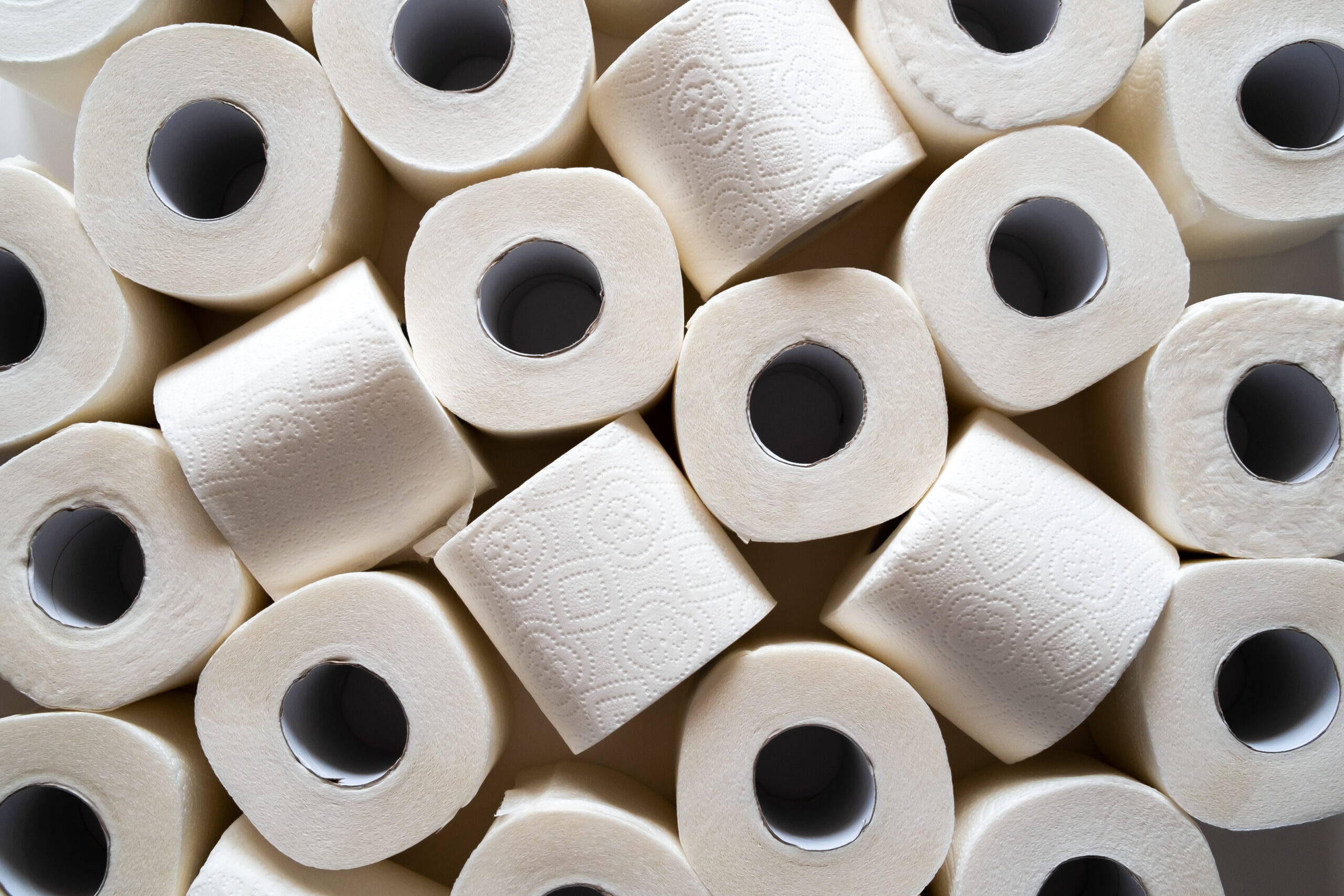
material. At the start of the lockdown, things like pasta and toilet paper became highly sought- after goods, which many people bought in bulk and hoarded at home – out of fear that shortages would follow. A symbol for this fear that united the population is the genuine, structured toilet paper made in Austria on which the miniature sheet is printed: each miniature sheet is exactly the same size as a genuine sheet of toilet paper, and the perforations on the stamp are also typical of the perforations in toilet paper. BUT PROCESSING THIS MATERIAL WAS ANYTHING BUT EASY:
Toilet paper is too soft and tears when it gets wet, meaning that use of a wet gum was not possible. The problem was solved by bonding a self-adhesive foil made of paper manufactured from natural fibres to the back of the toilet paper. In elaborate production stages the paper was manufactured in large rolls, then made into sheets, coated with the foil and finally printed – a process that was designed and optimised step by step over the course of many months. The supplement of € 2.75 charged on the stamp was used for charitable purposes.
Product Gallery